
Faith and love in The Sugar Wife


Highly Recommended

Repression, Power, and Renewal

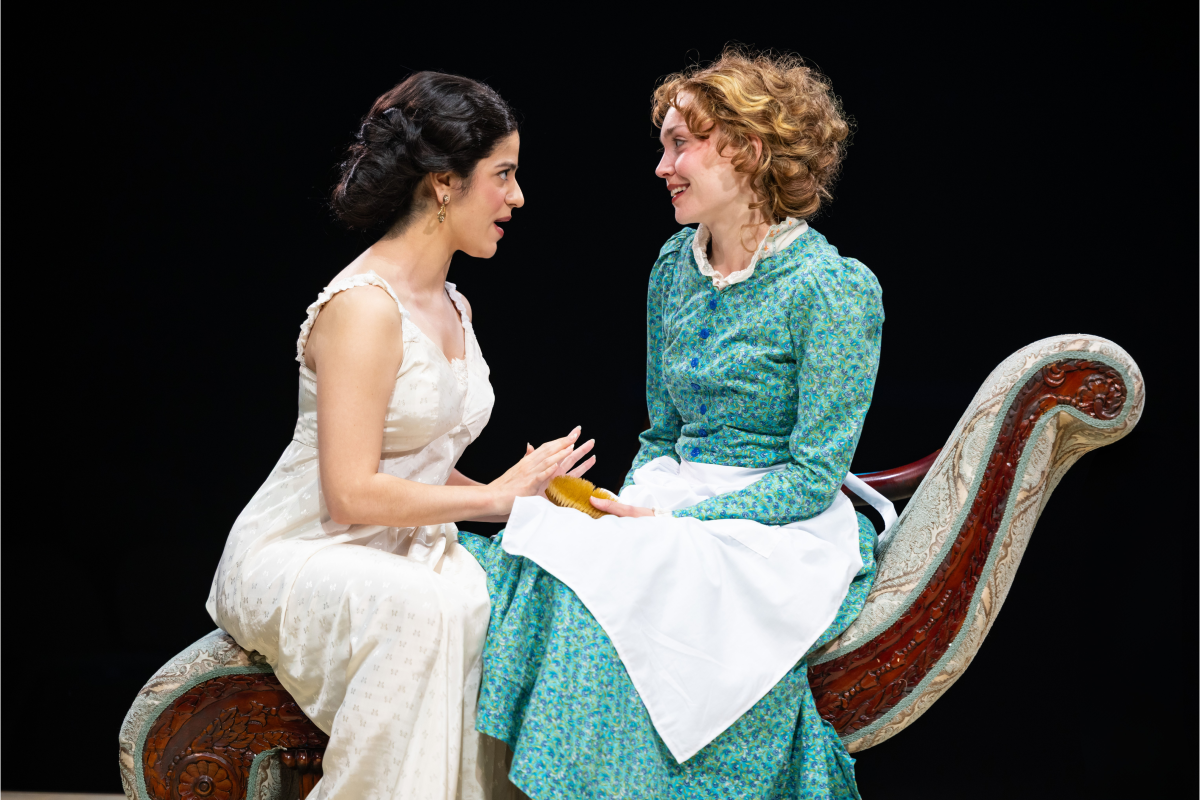
A Quaker couple living in Dublin, Ireland circa 1850, invite a former enslaved African-American woman and her companion to spend ten weeks in their home while touring the British Isle promoting the abolitionist movement.  Their visit concludes on the spring equinox bringing a promise of rebirth and new beginnings.

The Sugar Wife is a story of devotion in all of its manifestations including faith, love, and charity — as well as devotion to work and artistic expression. The pivotal titular character is Hannah (Annie Hogan) whose husband Samuel Tewkley (Todd Wojcik) is a sugar and tea merchant.

On the surface the couple are devoted to their religion and to each other living a comparatively comfortable affluent life while maintaining a superficially austere façade consistent with Quaker ideals.

Hannah endeavors to offset their privilege through myriad good deeds and charity work represented here primarily though her visitations to Martha Ryan (Kristin Collins) a syphilitic sex worker who is literally on her deathbed.

Having visitors for nearly three months brings a level of intimacy that causes each person to reveal much of their inner character, exposing painful desires, repressed passions and secret motivations.

Sarah Worth (Ashayla Calvin) the formerly enslaved woman is accompanied by Alfred Darby (John LaFlamboy) a privileged white man who bought her freedom. Darby an amateur photographer, engaged in the nascent art form, acts as her manager, arranging her speaking opportunities, though it is apparent their relationship is more complicated than it appears on the surface.

Integrity is the alignment between what you believe, what you say, and what you do and is a key element with each character. Keeping this balance is a constant human struggle. Many people make bargains with themselves to justify actions that are in conflict with their ideals, some repent and other simply surrender to their baser instincts.

Weaving throughout the story is a theme of sexual power represented by a slave, a prostitute, and a woman in an unhappy marriage. But this theme is not simply one of domination but rather one of symbiosis as the players leverage their power to maintain their own survival and meet their own objectives.

In the end, with the coming of spring, the question becomes whether they can each emerge from their cold dark wintry past and find a new way forward.

The U.S. Premiere of The Sugar Wife written by Elizabeth Kuti and presented by Artistic Home is expertly directed by Kevin Hagan in the round providing a particularly intimate experience.

The exceptional cast is headed tenderly by Annie Hogan. In spite of his character’s personal failings Todd Wojcik portrays Samuel with a sympathetic and oddly endearing quality that adds pathos to his inner conflicts.

I wish Ashayla Calvin as Sarah Worth had been given more to do. Her understandable detachment from the others makes her feel present mainly to motivate them – – though her oratory vignettes were powerfully delivered giving her notable talent a few welcome opportunities to shine.

John LaFlamboy portrayed Sarah’s companion Alfred Darby with an undercurrent of danger that keeps you wondering about him while Kristin Collins as the bedridden Martha injected a bit of dark comic relief delivering a defiant air that suggested she was not giving up the ghost easily.

This is a provocative and intellectually engaging examination of integrity and interpersonal relationships within the context of rigid social constraints and gender expectations of the 19th century.

Details: The Sugar Wife is at Theater Wit, 1229 W Belmont, Chicago IL through May 3, 2026. Runtime is about 2 ½ hours with one intermission. For information visit theaterwit.org or call 773-975-8150.

Review by Reno Lovison

For more reviews visit Theatre in Chicago
 

August Wilson back at Goodman


Review: MA RAINEY’S BLACK BOTTOM at Goodman Theatre Image

Highly Recommended

Disappointment leads to despair

Picture four blues musicians sitting in a recording studio’s rehearsal hall examining their lives while waiting for the prima donna to perform. But be patient. The show is the very interesting, highly recommended Ma Rainey’s Black Bottom by August Wilson now on stage at The Goodman.

Ma Rainey, perfectly interpreted by E. Faye Butler, is the leading artist of a struggling Chicago based blues label owned by brothers Irvin (Marc Grapey) and Sturdyvent (Matt Decaro). The band consists of pianist, Toledo (Kelvin Roston); bassist, ‘Slow Drag’ (Cedric Young); trombone/guitar player, Cutler (David Alan Anderson); and horn player Levee (Al’ Jaleel McGhee).

Ma’s personal entourage also consists of her nephew,  a stuttering singer named Sylvester (Jabari Kaliq) and her young lover, Dussie Mae (Tiffany Renee Johnson).

Set circa 1927 at the height of the Great Migration, this tragic drama is rooted in personal trauma, systemic racism and economic exploitation. In true blues tradition each man reveals his inner self through storytelling. In the process there is a good amount of convivial, often dark, humor born of a recognition of shared experience with an undercurrent of shared pain.

The ambitious Levee is the pivotal character, representing a youthful progressiveness at odds with Ma’s traditional approach and controlling nature. He is also a subject of amusement for his more seasoned and philosophical bandmates who simply want to get on with their work at this point in their career.

Ultimately, Levee is overcome by personal trauma and disappointment. His recent acquisition of a new pair of stylish shoes becomes a symbolic component in the actions about to take place. They are the physical manifestation of his upward mobility, his hunger for attention and represent the persona of affluence and success he wants to convey to the world around him.

Written in 1984 this is clearly reminiscent of many great literary tragedies. Wilson understood that he was crafting an African American story rooted in Black experience, yet one that would be witnessed by white audiences as well.

His mastery of African American vernacular, speaks directly to Black audiences with familiarity and affirmation, while offering white audiences a window into a cultural world they may not know. In doing so, Black audiences find recognition and validation while white audiences gain insight.

Expertly directed by Chuck Smith with music direction by Harry Lennix, this is apparently a labor of love that manages the production with an honesty and care while paying tribute to the sensitivity of Wilson’s material.

The multi-level set design by Linda Buchanan emphasizes the dominance of Irvin and Sturdyvant as they observe the performers from their elevated vantage point in the control room. From there they bark commands, provide food and dole out the pay.

Faye Butler plays Ma with requisite bombast and over-the-top energy that makes her larger-than-life character unmistakably in command of her domain while belting the blues with an authority that proves she has the chops to back-up her formidable presence.

McGhee as Levee does a great job of methodically peeling away each layer of the onion slowly revealing his inner torment. Fellow musicians Young, Roston and Anderson display a measured maturity in their easy banter that makes me feel like I’m eavesdropping in a neighborhood barber shop with echoes of tales that are reminiscent of ancient fireside rituals.

Details: Ma Rainey’s Black Bottom by August Wilson is at The Goodman, 170 N. Dearborn, Chicago through May 3, 2026. Runtime about 2 and a half hours with one intermission.  For tickets go to GoodmanTheatre.org/MaRaineys visit the Box Office or call 312.443.3800.

Review by Reno Lovison

For more reviews visit Theatre in Chicago
On the horizon


(See below) William Shakespeare (comp from Chandos post)

Info and shows

Eggs 

There used to be scores of egg hunts sponsored by organizations, schools and neighborhoods. So it was nice to hear of one sponsored by the Prairie District Neighborhood Alliance. The group hosts its 19th Annual Easter Egg Hunt at Chicago’s Women’s Park and Gardens April 4, 2026, from noon to 2 p.m. The Easter Egg hunt will begin at 12:15 p.m.

What to know: The egg hunt is for ages 12 and younger with hunt areas divided by age. Also, participants are to bring their own basket and be accompanied by an adult.

And more

Partners of the event include the Chicago White sox and Chicago Rec Sports which will donate hundreds of toys. The White Sox organization will give away 500 free game tickets. 

Activities: Easter Bunny visit, petting zoo, face painters, balloon artists, sports games and hundreds of prizes. Noshes: Easter cupcakes, cookies and other refreshments. 

The Chicago Women’s Park and Gardens is at 1801 S. Indiana Avenue,  Chicago.  Admission is $18 for children 1-12 and $10 for age 13 years to adults. No charge for children under one year old. Tickets are required.   For more information or to purchase tickets, visit the event website:  http://southloopeasteregghunt.com/ or call (312) 401-2688.


Shakespeare and more

Shakespeare’s Birthday is celebrated by of course – The Chicago Shakespeare Theater in CST’s three venues:  Jentes Family Courtyard Theater, The Yard, and the Carl and Marilynn Thoma Upstairs Studio with productions running simultaneously for only the second time in the Theater’s history.

The Merry Wives of Windsor, the world premiere play Fault, and Indian Ink Theatre’s Mrs. Krishnan’s Party will jointly run April 18–26 with a celebration of Shakespeare’s 462nd birthday on April 23. 

“These three productions express … what an American Shakespeare company could be: entertaining and engaging tellings of Shakespeare’s stories alongside exciting contemporary work, mixed in with some of the best theatrical events from around the world,” said Artistic Director Edward Hall.

Jodie Jacobs

For more theater info visit Theatre in Chicago

Off Nights

Off‑Nights is a Queer Operatic Extravaganza


This campy, opera style, cabaret performance mostly in drag is oddly compelling.

The unconventional storyline comprised of seven sexually ambiguous individuals has the show living up to its tagline of a queer extravaganza.

Thompson Street Opera Company is worth keeping an eye on. Their recent premiere production of Off-Nights at the Sometimes Café at Bramble Arts Loft in Andersonville was a short run just one weekend but worth mentioning for the record.

As the title implies the action is set in the off-nights (or weekdays) of a popular drag club where the second-string performers get a chance to strut their stuff while staff and patrons declare their love or at least attraction for each other.

This dramatic cantata is expertly narrated by The Pianist (Kingsley Day) an amused and mostly detached observer who does double duty as accompanist to the singers.

Admittedly the elder of the crew, Day dressed androgynously in black sequined pants and ruffled blouse while sporting a short blond wig of dubious quality, is not only a very capable musician but simultaneously sets each scene in a dryly humorous tone. Day is the guiding presence – – the glue that keeps each lash in place.

What makes this theatrical company worth note are the exceptional voices beginning with soprano Katherine Petersen as Sarah Spangle who provides the sweet opening number “Sometimes” in which she expresses her love for tenor bartender Bob (Brian Pember) while adding the word “sometimes” to the end of each line of devotion.

Soprano Jade Dasha provides an air of powerful mystery and true anguish, taking the mezzo voice as the clairvoyant Madame Nappu.

Baritone Alexander Quakenbush as Drew offers a comic element as the young man who peaks the romantic interest of nearly everyone. As a budding composer he is responsible for such lyrics as “since the dinosaurs were drinking beers” to indicate the length of time he has been in love.

The score by Dave Walther harkens back to an earlier time, reminiscent of some 1920’s or 30’s musicals that were trying to be contemporary while still staying within a more formal musical structure. For a common reference think maybe Jeanette McDonald and Nelson Eddy. This of course is what gives the “opera” a campy tone while providing the performers with interesting bel canto vocal opportunities.

This brings up the term opera as well as ballet, recently maligned by the young cinema celebrity Timothee Chalamet who declared “no one cares” anymore about either art form.

Though the statement is harsh I do believe that both terms have the tendency to scare much of the theater going public who might believe the language will be foreign and the music overly complex or beyond their comprehension. Well, there is no fear of that here. In fact, though not really necessary, this production utilized projected lyrics onto the black background, I believe more as a further tongue-in-cheek nod to traditional operas.

This being said not long ago the Northshore “Light Opera Works” changed its name to “Music Theatre Works” I imagine at least in part to overcome this stigma.

As for ballet this production offers the audience a few dance numbers designed by Jordan Ricks performed by drag king Mx. O’Lydian and drag queen Delta Badhand.

Though severely mismatched in height, Delta at more than six feet in heels, towers over her partner by 24 inches or more. But the duo performs with unabashed sincerity – – with Delta presenting an endearing earnest vulnerability.

Off-Nights at the Sometimes Café may not be everyone’s cup-of-tea or latte for that matter but I found it amusing, with a charm of its own.

Though the musical composition was a bit chaotic and maybe atonal, the superb singers and their piano accompanist met each challenge with conviction including the nearly cacophonous contrapuntal finale providing the production with a truly culminating climax.

Since this show which was onstage at the Bramble Art Loft at 5545 N Clark Street, Chicago through March 22, 2026 will be over by the time you read this I will simply suggest that you visit thompsonstreetopera.org to learn more about upcoming productions.

*As a footnote I will add that it was announced that this company has lost some of its funding from the National Endowment for the Arts (NEA) due to the federal cutbacks made by the current administration. This arts organization as well as many others need your support more than ever.

Reviewer Reno Lovison

City Lit has you seeing red


Skyler Tipton and Orion Lay-Sleeper. Photos by Steven Townshend (Distant Era)

Highly Recommended

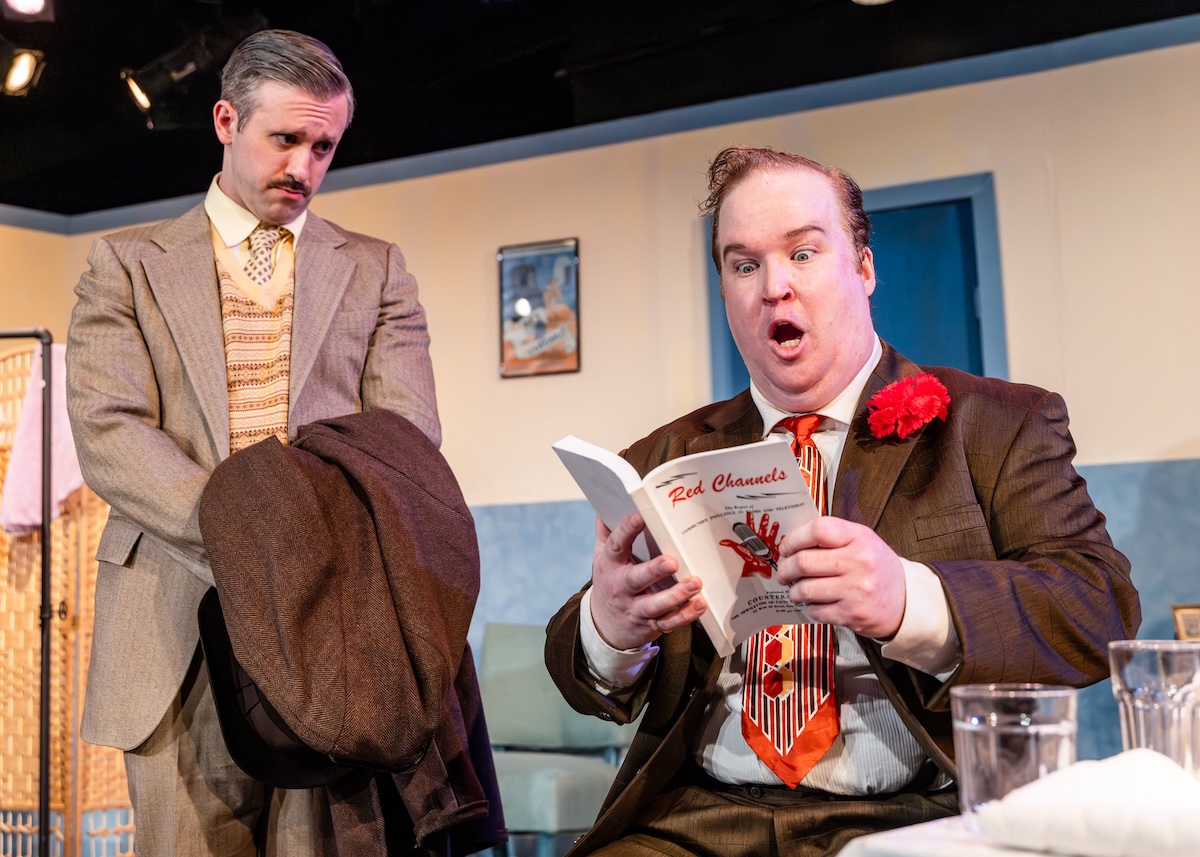
In “Changing Channels” at City Lit Theater, Maggie Carlin and boss Eddie Gilroy abruptly learn that creating what will become an iconic TV comedy show is not all fun and games.

The storyline is a fictional account of actual events and the characters are thinly veiled portrayals of real people.

The character of Eddie Gilroy is Jackie Gleason, a representation of one of the early giants of television.  The creator of the popular syndicated situation comedy “The Honeymooners,” Gleason is played by Orion Lay-Sleeper with a perfect balance of requisite broad humor, bombastic personality and all-important charm.

The massive popularity of Gleason, and by extension Gilroy, is the ability to play a loud and at times obnoxious character, and still keep him likeable.

Underneath his rough exterior, Gleason was a sensitive and wounded person, giving him the ability to play wonderfully dramatic roles and portray characters like his alter ego “The Lost Soul” a perpetual outsider only able to observe life but never joining in.

Gleason was a softie and Lay-Sleeper did his homework, allowing him to tap into that dichotomy necessary to deliver to us a full three-dimensional interpretation of Gilroy.

The first appearance of “The Honeymooners” was as a series of short, ten-to-twenty-minute, comedy sketches on Gleason’s variety show.

Gleason’s on camera wife, Alice Cramden, was played by Audrey Meadows. However, what many people do not know or have forgotten is that Alice was originally played on the DuMont Network by Pert Kelton who is the basis for this version’s Maggie Carlin played by Kat Evans.

Feeling the need for an actress who could stand up to him, Gleason liked to spar with Kelton who played a more aggressive and caustic Alice that was different from the later, more well known, stern but warm, preson portrayal by Meadows. Consequently, Evans gives us a more outspoken Carlin with a bit more Brooklyn attitude and fiery independence.

It is perhaps this attitude that sets in motion the central event of this play clearly and convincingly crafted by John Reeger.

The premise is simple. Currently appearing on the fledgling DuMont TV network, Gilroy has an offer to move his wildly popular show to CBS. However, his manager, “Bullets” played by Johnny Moran, informs him that CBS is requiring all of its employees to sign a loyalty oath.

Due in large part to the “Cold War” the nation is in the midst of a “Red Scare.” Certain politicians and right wing organizations are terrified that the movie industry and now television are being infiltrated by communists bent on utilizing this new media to promote their propaganda to the American public.

Kenny (Andrew Pappas) in Citi Lit’s “Changing Channels.”

A list of actors, directors, and writers suspected to be commie sympathizers has been distributed to broadcasters and sponsors with the threat to boycott their companies if any of the listed people are hired.

In order to move the show to CBS everyone must sign the loyalty oath whether they are listed or not. As it turns out, Carlin and husband Peter (Skyler Tipton), are on the list because they attended a rally in support of labor unions. As a matter of principle Carlin refuses to sign, setting up the conflict in the storyline.

As it turns out, in reality, we know Kelton did not go on to make the more popular version of the “Honeymooners.” In fact, she basically did not get any really good acting opportunities for about 15 years until she created the role of the widow Peroo, Marian’s mother, in the Broadway version of “The Music Man” which she went on to play in the movie.

The character of Kenny (Andrew Pappas) is a stagehand who overhears much of what is happening. As part of the staff he will have to make some choices of his own. He is us.

Reeger gives the character of Kenny a chance to express his own dreams of success to Peter. It’s a juicy short monologue which Pappas literally “knocks out of the park.”

“Changing Channels” is not so much about what happened or even how it happened but rather, that it happened at all. That is the cautionary tale.

In our current political climate playwright Reeger is asking us to learn from the past, to see the danger in political paranoia, ideology run amok and social divisiveness–to witness how this plays out on the micro level–how, political mass hysteria effects actual people living their own day-to-day lives and to see how those who simply standby and observe are complicit in the conspiracy.

City Lit does a nice job of offering thought provoking entertainment with a good balance of humor and drama, and this particular ensemble headed by director Kevin Theis was terrific.

“Changing Channels” is presented by City Lit Theater Company at 1020 W Bryn Mawr, Chicago, IL 60660 (on the second floor of the Edgewater Presbyterian Church). Runtime is about 2 hours with one intermission. Visit citylit.org for tickets and information.

Reviewer: Reno Lovison

For more reviews visit Theatre in Chicago
 

Feline Fun


Highly Recommended

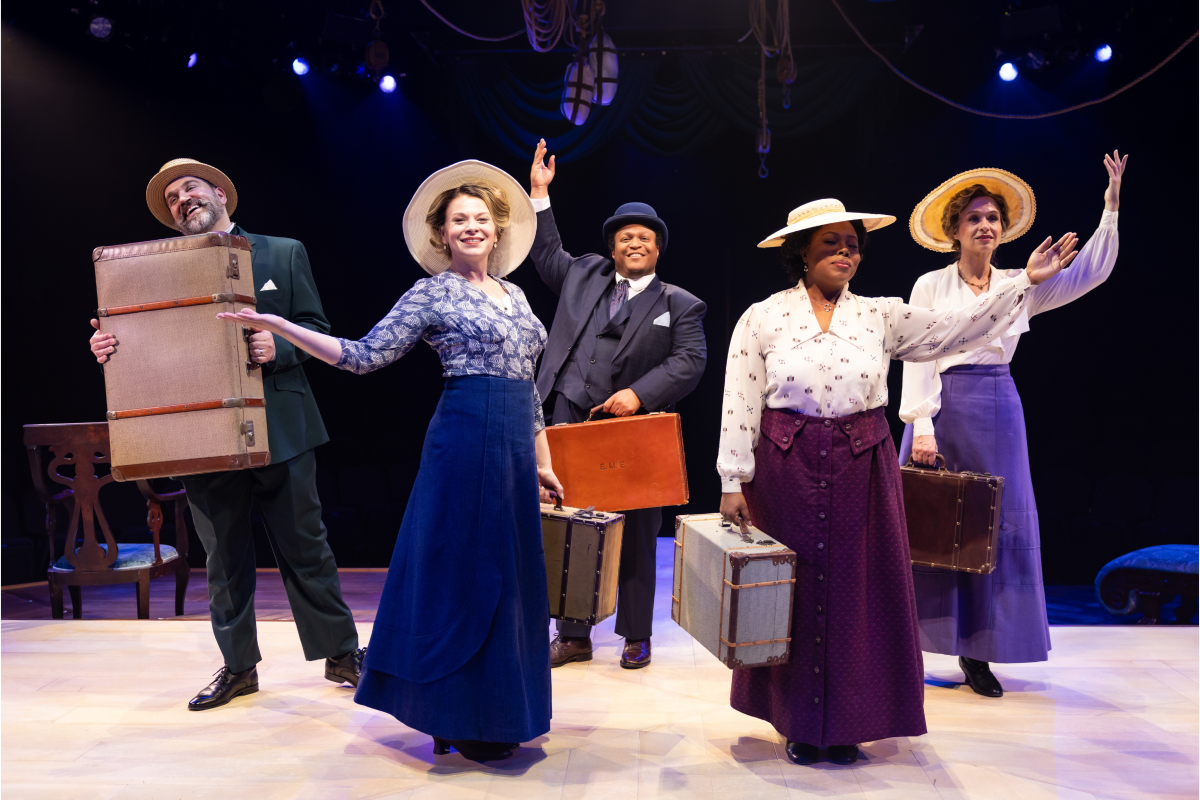
Music Theater Works’ production of CATS at Skokie’s North Shore Center for the Performing Arts is a nonstop “catcaphony” of frenzied feline fun.

With elements of musical theater, dance, opera and acrobatics there is definitely something for everyone.

Featuring oversized set pieces, designer Milo Bue gives us a cat’s eye view of their world. Presented in the smaller North Theatre of the Skokie venue it is the perfectly intimate size for this cabaret style production.

Composer Andrew Lloyd Webber conceived of this production based on his love for the work of T.S. Eliot’s Old Possum’s Book of Practical Cats that celebrates the personalities and behaviors of cats.

Using much of Eliot’s poems nearly verbatim, Webber employs a variety of musical styles and movement disciplines to project the playful, often quirky and always entertaining nature of each of the cats.

From Puccini to Elvis – – with tap dancing cats, cats on pointe, chandelier swinging acrobatics and floor level tumbling, cats are in constant motion. They’re under the TV, on top of the table, climbing the lamp and popping up in the audience. With a cast of thirty performers, cats appear everywhere.

It is no accident that head cat wrangler Mandy Modic is both director and choreographer as this is a huge feat of synchronized movement.

The action is nonstop and requires a person with the ability to essentially stage an elegant circus performance while making it look like a cohesive theatrical presentation which Modic seems to do effortlessly.

Like a good ringmaster she has you looking everywhere and delighting you with every glance. In the massive chorus numbers, each performer is totally engaged in their own unique stage-business, ready to entertain whoever happens to be focusing on them.

The entire cast is remarkably talented in both voice and movement. I’m sure assistant choreographer Jordan Beyeler and dance captain Emily Ann Brooks (Carbuckety) contributed massively as there are a lot of steps to learn and a lot of dancers who need to learn them.

The challenge for some is the lack of a plot. When pressed for an explanation of its meaning Webber famously quipped, “It’s about cats.”

There is no actual storyline but rather a series of individual short vignettes showcasing the discernible personalities of each cat which further projects the well-known notion of these oddly independent creatures.

The musical highlight of the show is of course Webber’s magnum opus “Memory” sung tremendously by Ava Lane Stovall as Grizabella the aged former glamour cat, then later revisited in a poignant sweet reprise with the compassionate kitten Sillabub (Irene Lo). The other vocal standout is Old Deuteronomy played with soulful basso perfection by Sam Nachison.

Additional favorite musical numbers include the playful Mungogerri (Alex Villasenor) and Rumpleteazer (Madison Jaffe-Richter) notably responsible for several missing objects; Magical Mister Mistoffelees (Nick Johnson) the consummate showman – – part magician and part whirling dervish always available to entertain; and, hanging out at the stage door, Gus, the theater cat (John Cardone) who was once quite famous in his day.

Musical director Linda Madonia and her eight-piece orchestra aided by assistant Alina Lowenstein does a spectacular job with the Webber score and vocals.

The well-executed diverse wardrobe, hair, and makeup are a standout and no small task. The addition of the “cat cam” and on-stage TV (engineered by media designer Anthony Churchill) are a fairly recent addition offering an updated multimedia component with a vintage vibe.

This is a must-see for theater kids and dance students as well as anyone looking for an enjoyable, highly entertaining evening.

DETAILS: CATS presented by Music Theatre Works is at North Shore Center for the Performing Arts, 9501 Skokie Blvd., Skokie, IL through March 29, 2026. Runtime is about 2 hours and 20 minutes with one intermission. For tickets and information visit musictheaterworks.com or call the box office at (847)673-6300.

Reviewer: Reno Lovison

For more reviews visit Theatre in Chicago
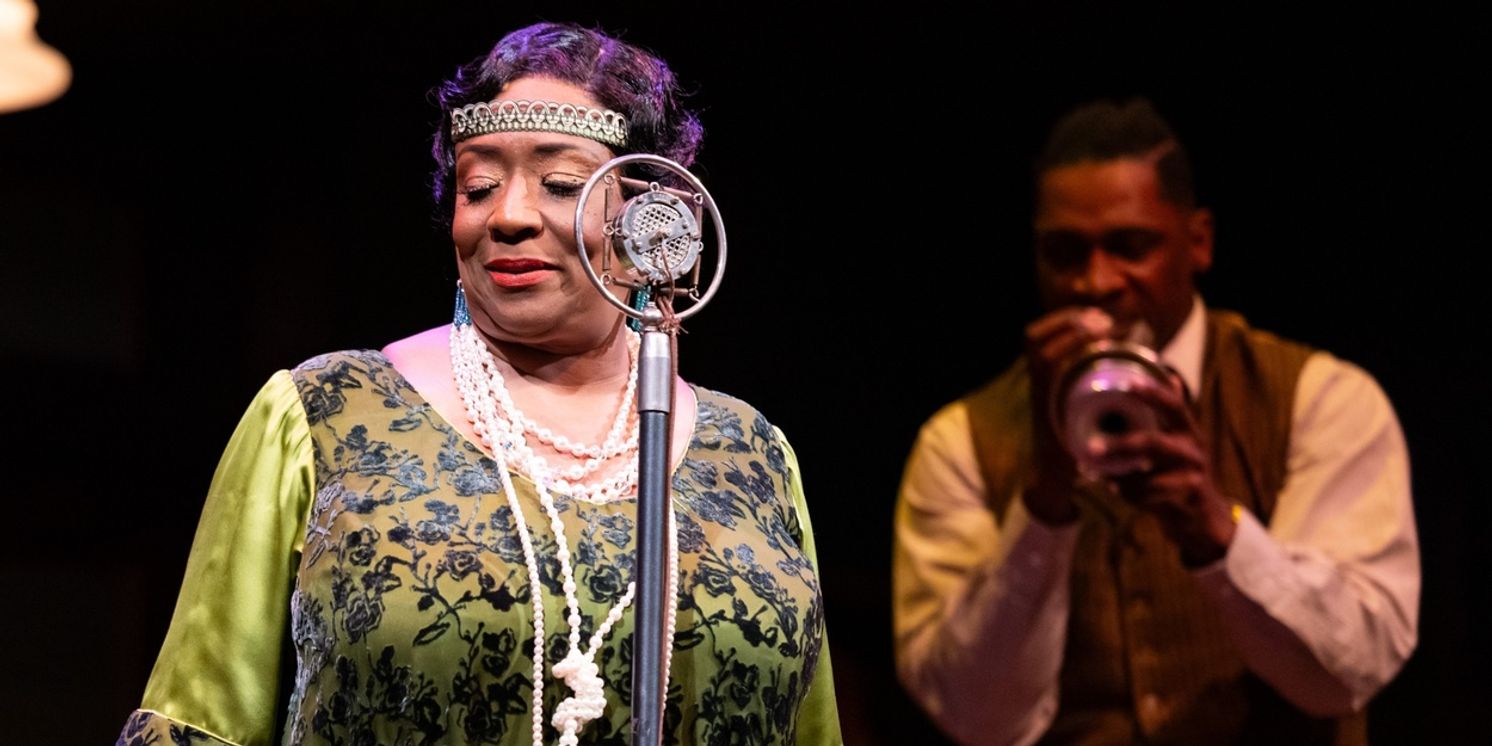
 

Somewhat Recommend

Comical exploration of reality.

There are two good reasons to see Harvey, by St. Sebastian Players. One is the humorous quirky Pulitzer Prize winning script by Mary Chase and the other is the exceptional performance of Jeff Broitman as Elwood Dowd, the pleasant oddball fellow whose companion and best friend is a six-foot rabbit.

Elwood lives with his sister Veta (Julie Utrup-O’Nan) and niece Myrtle Mae (Claire Rutkowski) who have come to live with him after the passing of the family matriarch.

The problem is Elwood owns the house and the two women are mortified and generally disturbed by Elwood’s behavior especially as it relates to his peculiar friend. Consequently, they conspire to have him committed to the care of Dr. Chumley (Robert Dean) aided by Dr. Sanderson (Eric Prahl).

This story has a mid-century vibe that projects sensibilities which have evolved since that period when experimental medical concoctions and institutional confinement were the accepted treatment for those considered to be out-of-step with societal norms.

There is also a noticeable overtone of misogyny particularly between Dr. Sanderson and his nurse Ms. Kelly (Erin Gordon) which is offered tongue-in-cheek for comic effect but might be a bit cringey for some.

It’s clear that Elwood is not a threat to himself or others and in the end this story has us consider how real or unreal are other people’s reality, and whether every peculiarity requires intervention.

With a number of laugh-out-loud moments, it’s just good fun. Director Lisa Ramos has good control over the action and the hinged set design of Emil Zbella was commendable, while Broitman brings an engaging natural whimsical charm to the role of Elwood worthy of any stage.

Established in 1981, the Saint Sebastian Players, according to their website, is a membership-based theatre company that brings together actors, directors, writers and technical crews in a supportive environment that fosters learning and growth.

The venue is comfortable with tiered seating that accommodates about 75 in the basement of St. Bonaventure Church. There is no elevator so be prepared to navigate some stairs. Limited free parking is available in the back with plenty of additional street parking.

Details: “Harvey” by St. Sebastian Players is at St. Bonaventure, 1625 W. Diversey Parkway through March 8, 2026. Runtime is about 2 hours with one intermission. For ticket information and schedule visit saintsebastianplayers.org

Reno Lovison

For more reviews visit Theatre in Chicago

The Irish Through Song

Recommend

The Irish and How They Got That Way by Porchlight Theatre Company at Ruth Page Center is an entertaining but arguably superficial look at Irish History particularly as it pertains to Irish American Heritage.

The production is essentially a review or series of Irish songs strung together with a narrative by Frank McCourt author of the Pulitzer Prize winning book Angela’s Ashes.

It features about 35 songs or song segments very well performed by Emily Goldberg, Michael Mahler, Leah Morrow and Luke Nowakowski. Music Direction and Additional Musical Arrangements are by David Fiorello and Original Musical Arrangements are by Rusty Magee with Elleon Dobias (Musician).

Director David Giorlmo keeps the story moving and the overall theme upbeat and fast paced. A simple set design features a backdrop of three cloth sails with projected historical and evocative images assembled by digital designer G. Max Maxin.

McCourt’s style is to take a somewhat comical view of tragedy which he does here in his history of the Irish people. It includes their mistreatment by the British, the infamous potato famine and their less than welcoming arrival in America including job notices stating Irish Need Not Apply. It also does not shy away from the stereotypic love for drink that incidentally had a devastating effect on his own family.

The production takes time to celebrate the contribution of The Irish to the building of America, specifically as it pertained to mining and railroad work. The narrator suggests that, “You need only trace your finger across a map of the railroads in America to find the graves of thousands of Irishmen.” These contributions led to the Irish participation in trade unions and politics.

The production also pays tribute to those of Irish decent who served in the military beginning with their participation in the Revolutionary War, the American Civil War on both sides as well as WWI and WWII not only as soldiers but in spirit such as George M. Cohan who gave us songs like You’re a Grand Old Flag, Yankee Doodle Dandy and Over There.

In light of current immigration issues, it is easy for descendants of such earlier immigrants as the Irish, Italians, and Poles to forget or be ignorant that their forebearers not that long ago, were subject to the same racial slurs and vitriol that newer immigrant groups now face.

Publications like Harper’s Weekly and Punch portrayed Irish immigrants with exaggerated, animalistic features equating them to various apes including gorillas implying that Irish people were biologically inferior and prone to violence.

Signs and editorials described Irish workers as “invaders” who would “steal jobs.” Newspapers and labor groups sometimes framed Irish immigration as a threat to American labor “flooding the market” and “undercutting wages.” This rhetoric helped fuel riots and mob violence in cities like Philadelphia and New York.

Some newspapers suggested that The Irish were, “pouring into our cities to steal elections” warning that Irish voters would “corrupt the ballot box.”

Holding up a mirror to reflect on our history, our accomplishments and our humanity, sometimes ugly but always real, is partly the job of theater.

On one level, the production is a joyous expression of the Irish people through song but it is also a reminder of pain and struggle with a wink and a nod because Frank McCourt wants us to see the absurdity of life and the humor in being human.

You’ll probably love this if you’re of Irish heritage because of the familiarity of the songs and background message. If you’re a few generations removed or have no Irish heritage you will likely find some insight into this segment of America that makes up about 10% of the overall population.

The Irish and How They Got That Way by Porchlight Theatre Company is at Ruth Page Center for the Arts, 1016 N. Dearborn St., Chicago. Runtime about 110 minutes with one intermission. Tickets are available at PorchlightMusicTheatre.org or by calling the Porchlight box office at 773.777.9884.

Reviewer Reno Lovison

For more shows visit Theatre in Chicago

Confederates at Redtwist


Madelyn Loehr (Candice), Monique Marshaun (Sandra) and Makari Tobinson-McNeese (Malik) Photo by A.R. Boseman

Highly Recommend

Be prepared – – I am getting ready to gush because this production of Confederates by playwright Dominique Morrisseau and directed by Aaron Reese-Boseman at Redtwist Theater is the level of writing and performance I hope to see when attending a play.

This intimate drama delivers a message of unconscious bias and institutional slavery put into motion generations ago but still very much alive and grappled with today on both sides of the racial divide.

Sandra (Monique Marshaun) a female African American social science professor at a predominantly white university has been racially targeted through the appearence of an image of her face “photoshopped” on to the body of an enslaved wet nurse with a white baby at her breast.

The message seems to suggest that Sandra shows favoritism toward white students over her black students and is doing so perhaps as a way to maintain her own status as the most senior woman of color in her department.

The image has caused great distress to Sandra resulting in frank and sometimes too honest discussions between her, her students and her colleagues as she endeavors to discover the person or persons behind the perceived slander.

Alternately, the action shifts to the life of enslaved woman Sara (Shenise Danyel) whose brother Abner (Makari Robinson-McNeese) has escaped the plantation toward the end of the American Civil War, and taken up arms with the Union Army.

Sara also wants her freedom but is hesitant to take action. In the meantime, her master’s daughter, Missy Sue, claims to have been enlightened through visits to the North where she has come in contact with abolitionists.

Madelyn Loehr (Candice), Monique Marshaun (Sandra) and Makari Tobinson-McNeese (Malik)

She claims to have always loved Sara who was her companion and confident as a child and wants her to join in a scheme to transfer information about Confederate troop movements through Abner to the Union Army. Sara doesn’t know who to trust and what to do.

Time shifting within a story can be quite challenging but this Redtwist company under the direction of Aaron Reese manages it seamlessly. It includes some necessary adjustments to the clever set design of Kevin M. Rolfs.

The costumes by Marquecia Jordan are well considered but Missy Sue’s late 18th Century traveling dress is a standout.

Sandra and Sara stay within their own time periods while McNeese as Abner also plays university student Malik. Likewise, Loehr has the roles of Missy Sue and student Candice while Tocarra Castleman plays the enslaved LuAnne and University Instructor Jade.

Each of these actors morph effortlessly between their roles including a number of quick costume changes and substantial linguistic shifts in dialect that appears almost like a magic act.

Sandra and Sara face their own existential dangers as they confront the challenges of their white male dominated societies while simply trying to improve their lives and advance their positions.

The expert handling of this somewhat complex storyline along with the requisite dialog in both academic and historic vernacular is superb. Each of these actors have literally consumed their roles performing the material with total believability, naturalness and nuance. This is the style of acting that I yearn for and unfortunately find missing in many productions today.

I am reluctant to speak about any individual actor as they each without equivocation equally contribute to the success of the whole. This is a masterclass in acting. Any young performer looking for inspiration should rush to see this.

How is it that this superb production is hiding away in a thirty-seat storefront theater in Edgewater? Someone needs to gather up this show with this company and put them in a bigger venue with a larger audience. Both the performers and the story deserve to be seen and heard.

This goes to demonstrate that you do not need massive budgets or star power to create great theater. There is simply no substitute for good writing and insightful performance.

Redtwist is a not-for-profit enterprise that deserves your support as an audience member and/or as a philanthropic contributor.

Confederates is at Redtwist Theater, 1044 W. Bryn Mawr, Chicago through March 8, 2026. Runtime is 90 minutes with no intermission. Visit redtwisttheatre.org for tickets and information.

Reviewer Reno Lovison

For more shows and reviews visit Theatre in Chicago
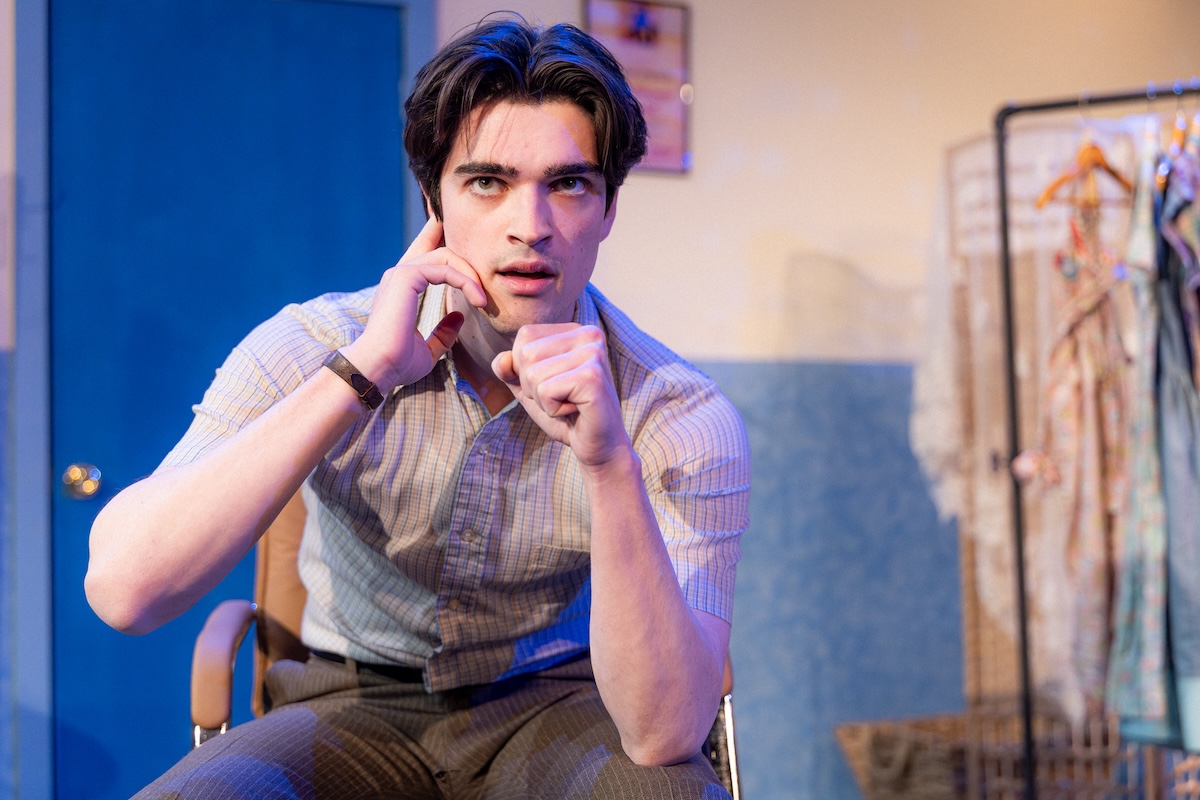
Admissions

Highly recommended

“Admissions,” a play by Joshua Harmon now at Citadel Theatre, should have its audiences talking about who, how and why a graduating high schooler is readily admitted to the college of choice.

Bright high school student Charlie Luther Mason, superbly interpreted by Justin Jarzomek, is applying to college. He has the grades and activities needed to supposedly get into many prestigious Eastern universities. That is not the problem.

We learn that his friend who wrote “black” on his application because his dad is black, gets into Yale but Charlie is on the school’s deferred list.

Ginnie Peters (Tina Shelley) his friend’s mom, is white and a good friend of  Charlie’s mom, Sheri Rosen-Mason (Susie Steinmeyer), at least when the play begins.

Spoiler alert: Charlie is admitted to a prestigious university by the play’s end but but thinks he shouldn’t go because he is supposedly taking up a spot for a less advantaged student.

How he arrives at that kind of thinking is really what this this play is all about. That, and the attitude of Charlie’s mom Sheri, a college admissions  administrator (not clear if she works for the high school) and his dad, Bill Mason (Tim Walsh) offer the play’s philosophical bent.

Directed by Beth Wolf, the play should spark some interesting conversations.

Admissions is at Citadel Theatre, 825 Waukegan Rd. Lake Forest, Il now through March 15, 2026.

Jodie Jacobs

For more reviews visit Theatre in Chicago