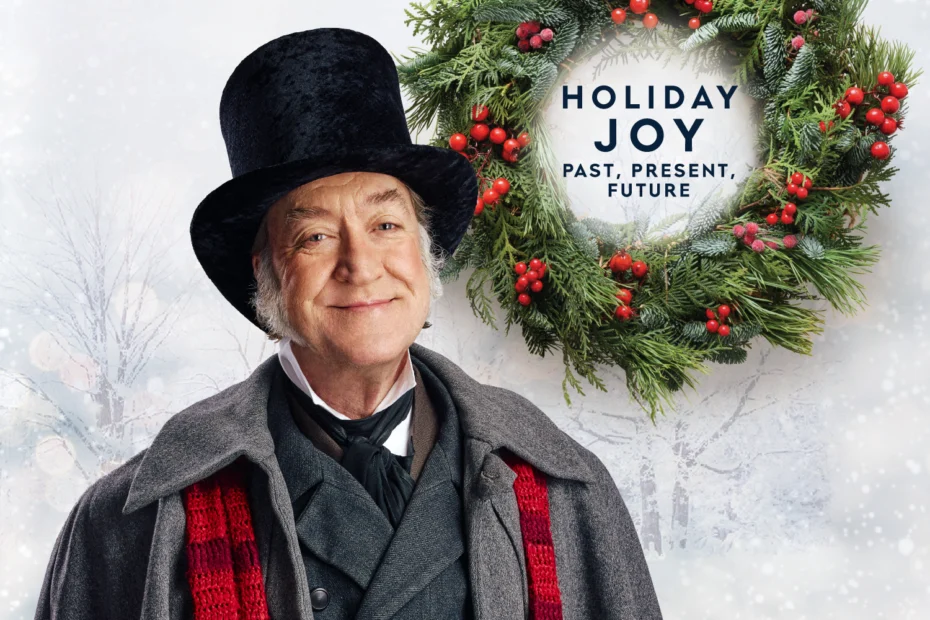
A Christmas Carol is a joyful tradition

An older man in Victorian clothing and top hat stands in front of a holiday wreath with the text "Holiday Joy Past, Present, Future" on a snowy background.

Highly Recommended

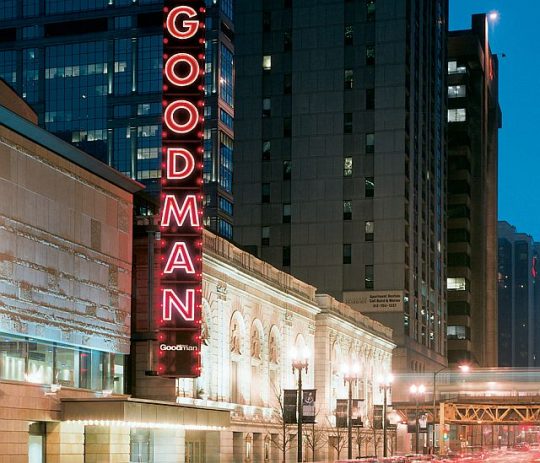
Coca-Cola may have codified our image of Santa but Victorian author, Charles Dickens taught the world about the spirit of Christmas. The Goodman Theatre has continued that lesson in Chicago for 48 years.

Part of the success and charm of this tale is its simple elegance. The story is easy to understand even by the youngest theater goers yet it does not talk down the audience. It’s a kind of secular parable with a strong moral lesson to change your ways before it’s too late.

Originally published as a novella in 1843, it was first adapted for the stage just one year later by Edward Stirling. Subsequent adaptations, including this one by Tom Creamer, do not stray far from the source including much of Dickens’ own original dialogue.

The unique contribution of The Goodman tradition has been to broaden the universality of the message through colorblind, gender neutral and mixed ethnic casting as well as incorporating the use of American sign language. It provides a chance for virtually everyone to see themselves in the characters on stage while reminding us that we are all a part of a larger world.

The central character is Ebenezer Scrooge (Christopher Donahue), a wealthy businessman of advanced years whose name through his actions and discourse has become synonymous with self-centered miserliness.

When asked to donate to the less fortunate Scrooge asks, “Are there no prisons? … And the Union workhouses, are they still in operation?” When told many would rather die than have to go to the various institutions, Scrooge replies, “If they would rather die, they had better do it, and decrease the surplus population.”

Dickens teaches us, through Scrooge, about the spirit of Christmas quite literally using spectral visitations. The first is the deceased former business partner of Scrooge, Jacob Marley (Daniel Jose Molina). He reveals that Scrooge is to be visited by three additional ghosts representing present (Bethany Thomas), past (Lucky Stiff) and future (Molina).

In each subsequent period we experience the life and fate of Scrooge’s long-suffering clerk Bob Cratchit (Jon Hudson Odom) who has been sorely used by his employer yet somehow manages to retain an optimistic view and joyful demeanor.

We also get a glimpse into Scrooge’s own personal life including his relationship with his own family and past acquaintances.

In the end, Scrooge is confronted with his own fate and the potential fate of those whose lives he affects, most notably the Cratchit family including the ailing youngster, Tiny Tim (Ella Boparai).

I am a Dickens fan and have read most if not all of his popular works and seen many film and stage adaptations.  What I love about him is his attention to detail. He was a keen observer of people and the world around him.

He was a quintessential chronicler of the Victorian period and a champion of human rights that made a significant impact by drawing attention to the needs of the lower classes in England and particularly the needs of poor and neglected children.

As a reviewer I find it difficult to comment on the interpretation of the individual players in this production because Dickens does such a fine job of defining his characters that a capable actor need only crawl into the suit and perform what he is given.

That said, it certainly can be done badly but when done well, as is the case with this cast, what we see is the actor’s own humanity bleed through.

Donahue’s Scrooge is not like every other Scrooge I’ve seen nor is Odom’s Cratchit. Rather what I see are the aspects of Donahue’s own personality that is most like Scrooge and likewise Odom’s personal relationship with Cratchit.

I suppose this is what every modern actor is hoping to achieve. Whether Hamlet, Willie Loman or Scrooge these characters are so well crafted that they meld together with the actor and in turn with the audience because we see ourselves in each of these archetypes.

It’s easy to say that in today’s political and social climate this year’s version has particular significance but the genius of this story is that the social ills that confront us have been here for time immemorial.

However, Dickens reminds us that we do not have to change the world we only need to reach out to the persons closest to us to affect a modicum of change for them.

Holocaust survivor and author Elie Wiesel helped to popularize the Talmudic phrase, “Whoever saves one life, it is as if he has saved an entire world.” Matthew 25:40 quotes Jesus as saying, “Truly I tell you, whatever you did for one of the least of these brothers and sisters of mine, you did for me.”

A Christmas Carol is a familiar story to many who may have seen other stage versions or any of the popular movie versions including a number of modern adaptations and even animations.

For this reason, I consciously avoided The Goodman tradition for far too long, feeling I would rather not revisit this chestnut again. Well, I was wrong! The Goodman staging of A Christmas Carol is an exciting and satisfying visual extravaganza that incorporates all manner of stagecraft with technologies old and new, while retaining the essential aspects of the original.

In this way a modern audience will find what they desire while the purists (like me) will find their familiar favorite elements still intact. I guess I have discovered and transformed the Scrooge in me.

Marketing materials for various products often promise, “It will bring out the child in you.” This production absolutely does it. Likewise, it is indeed “fun for the whole family.”

Details: “A Christmas Carol” directed by Malkia Stampley is at The Goodman, 170 N. Dearborn Street, Chicago, IL through December 30, 2025. Runtime is about 2 ½ hours with one intermission. Visit goodmantheatre.org for tickets and information

Reviewer Reno Lovison

For more reviews visit Theatre in Chicago
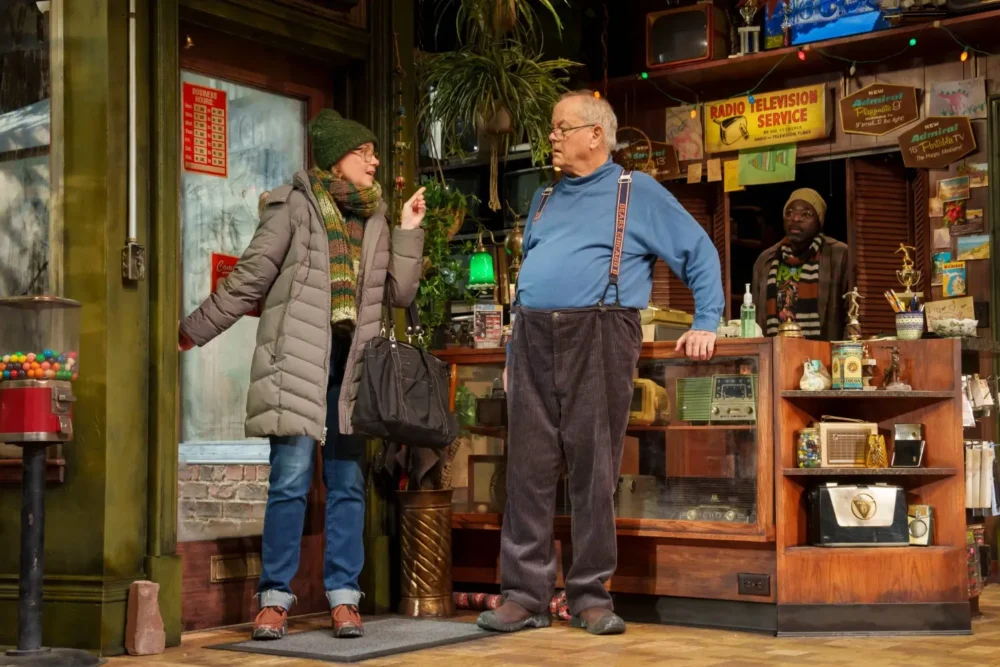
Ashland Avenue at the Goodman is a humorous and poignant look at the end of an era.

A woman in winter clothes speaks to an older man behind a counter in a cluttered vintage store, with another man standing in the background.

(L-R) Jenna Fischer, Francis Guinan and Chiké Johnson. Photo by Todd Rosenberg.

Highly Recommended  

A dusty TV store onChicago’s Ashland Avenue is the flagging flagship of a once great regional empire that boasted multiple locations. During his tenure, owner Pete (Francis Guinan) became a local celebrity, famous for his “Crazy Pete” commercials. He is to be recognized with a citation from the mayor for his forty years of service to the business community.

The question becomes whether this publicity bump is truly the end of the road or does it signal the first step of a new journey.

Now in his early seventies Pete still has dreams and ambitions however, daughter Sam, played by Jenna Fischer (re Pam Beesly on the popular sitcom The Office), who has been by Pete’s side throughout her life is now ready for her own adventures with her husband, Mike (Chike Johnson).

On the surface, Pete’s once great empire has collapsed and he may not be as financially secure as he once was but his past accomplishments have value in the lives he has touched.

This play is certainly about Pete and his store but is also a subtle thesis on the rise and fall of America’s Main Street including the role retail has played as a community hub.

Open to all, small local shops have been proverbial gathering places were people assembled, sought refuge, traded, and enjoyed both incidental and meaningful encounters as is evidenced by Pete’s relationship with Jess (Cordelia Dewdney), a young woman and former employee who lives with Pete along with her two children.

The dialog is spectacularly natural and flowing with surgical precision to tell this slice-of-life tale. There is not one wasted word.

Playwright Lee Kirk seems to have insight or an uncanny ability to tap into the essence of Pete’s entrepreneurial spirit. This ability is reflected to some degree in Kirk’s film The Giant Mechanical Man which similarly explores the intersection of a person’s private and commercial persona. The film also stars Fischer which is where the two met. They were married in 2010 and have two children.

Susan V. Booth has done a wonderful job directing this production giving us a fly-on-the-wall view of the action taking place on the delightfully accurate set design of Kevin Depinet. It showcases a dizzying accretion of merchandise and promotional signage presumably assembled over four decades. The set is skillfully augmented by the lighting of Jason Lynch which includes multiple TV screens and store light fixtures.

The explosive appearance of Will Allan as Young Man cannot go unmentioned. Will demonstrates that there are no small parts. In his brief appearance he leaves it all on the stage thus providing an important and pivotal plot twist.

Ashland Avenue has all the best elements of a traditional stage play with a contemporary vibe.

Details: Ashland Avenue is at The Goodman, Albert Theatre, 170 N Dearborn Street, Chicago, IL through October 12, 2025. For tickets and information call (312) 443-3800 or visit goodmantheatre.org.

Reviewer: Reno Lovison

Purple is Splendid Color

L - R) Lachrisa Grandberry, Brittney Mack, Ariya Hawkins and Aerie Williams.

From left Lachrisa Grandberry, Brittney Mack, Ariya Hawkins and Aerie Williams in “The Color Purple” at Goodman Theatre. (Photos by Brett Beiner)

Highly Recommended


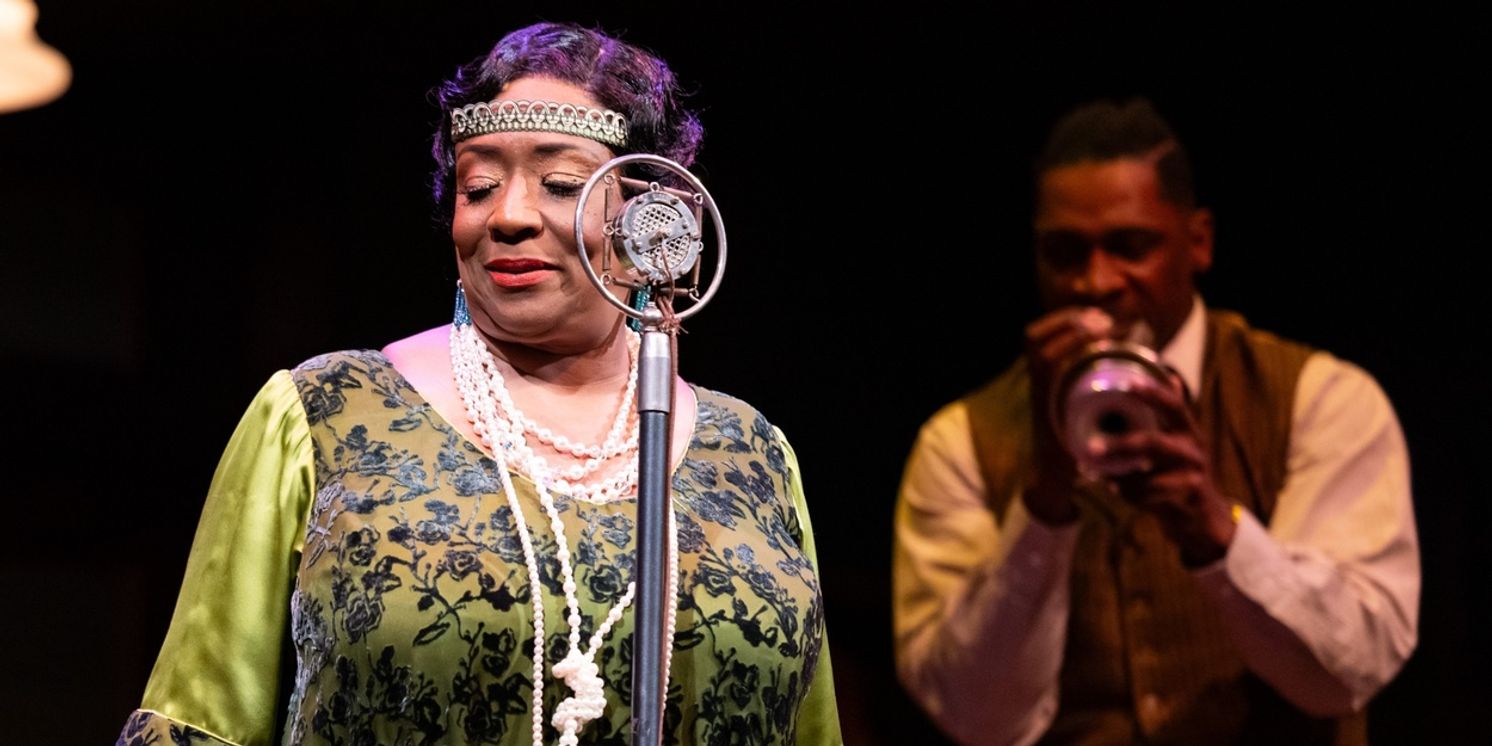
Tragic, hilarious, loud, energetic, fun and heartwarming, “The Color Purple-The Musical” at Goodman Theatre is nearly three hours of nonstop entertainment featuring an outrageously talented cast directed by Lili-Anne Brown with choreography by Breon Arzell.

This musical version of the story based on the Pulitzer Prize winning novel by Alice Walker has all of the appearance and qualities of Grand Opera beginning with the magnificent set design of Arnel Sancianco, beautiful costumes by Samantha C. Jones and a gigantic jazz/pop gospel inspired score by Brenda Russell, Allee Willis and Stephen Bray that includes nearly 20 musical numbers, providing every key player their own memorable lead vocal with chorus.

The show opens with a wash line silhouette of two young girls singing a children’s chant/song “Huckleberry Pie” then moves to the entire company singing “Mysterious Ways” setting the tone for the spiritual and circuitous life journey about to take place.

Set in rural Georgia in the early part of the 20th Century, The Color Purple follows about 30 years of the life of Celie (Brittney Mack), an African American woman who has been raped by her father, separated from her children and beloved sister then beaten by the man she is forced to wed. In the end she finds herself, her voice and her own strength and passion through the love, support and inspiration of a few women around her.

Celie’s sister Nettie (Shantel Renee Cribbs) is attractive and intelligent with an ambition to be a teacher that ultimately takes her far from her dear sister and their southern rural roots.

Considered ugly and slow with the ability to work like a mule, Celie is married off to Mister (Evan Tyrone Martin) primarily to keep house and look after his young children. He abuses her relentlessly but Celie feels trapped with no real options.

One of Mister’s children Harpo (Gilbert Domally) grows up to be a sensitive man who falls in love with Sofia (Nicole Michelle Haskins), an outspoken woman who has mastered the phrase “Hell no!”, which eventually lands her in trouble with the white mayor’s wife.


Observing Sofia’s ability to stand up to power and specifically the men in her life, Celie takes notes that ultimately contribute to her own defiance and release from the dominating forces that rule her.

The beautiful and talented Shug Avery (Aerie Williams) is a local girl who made good, singing in Memphis, who makes periodic returns home. Mister has been hopelessly in love with Shug all his life but was forbidden by his father (Sean Blake) to unite with a woman of ill repute.

Now considered to be approaching her peak, ill and with most of her best years behind her Shug comes to live with Mister and Celie. As part of this triumvirate Celie looks after Shug and nurses her to well-being. In the process the two find a kind of love neither of them has ever experienced before, forging a bond from which Celie draws ever increasing confidence and strength needed to finally break away from Mister.

The story has a happy ending seeing a repentant Mister and revitalized, independent, strong Celie, vocalizing her personal success in the musical number, “I’m Here” reunited with her prodigal sibling and children.

This is the level of quality theater you expect to see in a Chicago Loop production. Whether you are a seasoned theater goer or attend a few plays periodically you absolutely cannot go wrong with this choice. Ideal for Chicago area residents and visitors this will be a memorable experience perfect for a special occasion or simply a great night out. Don’t miss it.

DETAILS: “The Color Purple -The Musical” is at Goodman Theatre, 170 N Dearborn St, Chicago, IL, through August 3, 2025. Running time about 2.5 hours with one 15 minute intermission. For tickets and other information visit goodmantheatre.org or call Phone(312) 443-3800.

Reviewed by Reno Lovison

For more reviews visit Theatre in Chicago
 

‘English’ at the Goodman speaks eloquently about language and identity

Pej Vahdat, Sahar Bibiyan and Roxanna Hopen Radja in “English” at Goodman Theatre. (Photo by Liz Lauren)

Highly recommended

When you cannot adequately express yourself with the nuance and clarity of a native speaker, people do not realize that you are actually smart, funny, and kind. Instead, they only hear your imperfect pronunciation and limited vocabulary. You may be assumed to be inferior with little or nothing to offer.

Whether this is one hundred percent true or not, these are some of the fears that plague four adult students and their teacher studying for an English language proficiency exam in Iran.

Witty, insightful, cleverly written and produced, “English” is a Pulitzer Prize-winning play by Sanaz Toossi, directed by Hamid Dehghani and performed brilliantly at Chicago’s Goodman Theatre.

Roya (Sahar Bibiyan) is a youngish grandmother whose son is living in Canada. He wants her to be able to speak English with her granddaughter before she can rejoin the family.

Elam (Nikki Massoud) is a medical student whose insecurity about how people might perceive her heavy accented speech is stifling her progress.

Goli (Shadee Vossoughi) at eighteen is the youngest in the class, basically taking the whole experience in stride and doing her best to achieve her dream of passing the English exam that might be her ticket to a temporary work permit (green card) in America.

Instructor, Marjan (Roxanna Hope Radja) who had spent nine years living in Manchester, England, fears she is losing her proficiency advantage since returning to Iran. She spends much of her time leading the class through amusing word games while insisting that students speak only in English when in class and not lapse into Farsi when frustrated.

Omid (Pej Vahdat), the only male in the class, is the most proficient speaker. He draws ire from Elam and added attention from Marjan who is happy to have someone to speak with.

Pej Vahdat (Omid), left, and Iranian teacher Roxanna Hope Radja, (Marjan) in Goodman Theatre’s “English” by Sanaz Toossi. (Photo by Liz Lauren)

The set design by Courtney O’Neill immediately supports the voyeuristic experience, with the audience literally providing the third wall of the classroom as though we are peeking through a one-way glass. The window on the back wall provides a tantalizing glimpse of the outside world.

We all likely have some experience with immigrants who have learned English as a second language. Most of us have immense respect for their accomplishment and abilities.

Toosi takes this one step further by bringing us into the inner thinking of the members of this class. The show helps us to not only experience the frustrating process of learning a new language but also asks us to consider that language is not simply a matter of exchanging one word for another because your mother tongue is deeply related to your culture, personal identity and sense of self.

Feeling like you are not fully capable of expressing your deepest thoughts and emotions with utmost clarity is like navigating the world with one hand tied behind your back. Additionally, it may make some people feel as if they are rejecting their culture while others who achieve the elusive goal of total proficiency might feel a euphoric sense of accomplishment and pride at being able to straddle two worlds, indeed two ways of thinking.

Details: “English” is at The Goodman Theatre, 170 N. Dearborn, Chicago, IL through June 16, 2024. Runtime is about 1 hour and 45 minutes with no intermission. For tickets and information visit goodmantheatre.org or call the box office (312) 443-3800 (noon to 5 PM).

Reviewer: Reno Lovison is a Chicago video marketing professional and volunteer ESL tutor.

For more shows visit Theatre in Chicago


Masterful ‘Cherry Orchard’ at Goodman Theatre


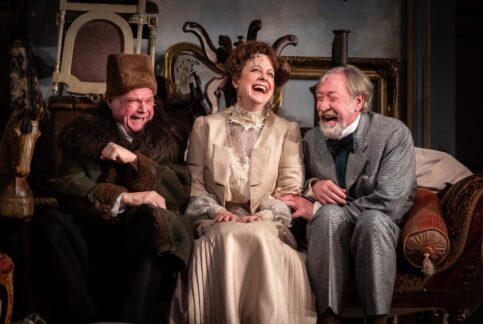
(L-R) Francis Guinan, Kate Fry and Christopher Donahue in Anton Chekhov’s 'The Cherry Orchard' Photos by Liz Lauren
:(L-R) Francis Guinan, Kate Fry and Christopher Donahue in Anton Chekhov’s ‘The Cherry Orchard’ Photos by Liz Lauren

Highly Recommended

Rich and masterful, “The Cherry Orchard” serves as a triumphant curtain for Robert Falls’ Goodman Theatre tenure.

If one had to choose a perfect ending for Robert Falls’ three-decade career as Artistic Director at the Goodman Theatre, his production of “The Cherry Orchard” would be it.

Anton Chekhov is Falls’ favorite playwright next to Shakespeare, and he purposely chose this play to close out his illustrious career.

“The Cherry Orchard” is Chekhov’s final play, written before his death in 1904. It deals with a failing Russian aristocracy, love, loss, and issues of class in society.

Make no mistake, “The Cherry Orchard” is billed as a comedy through witty dialogue, fall-down laughing antics, and squeaky boots.

Yet the audience is consumed with sadness throughout the production due to memories of painful loss from the generations who lived and died on that estate.

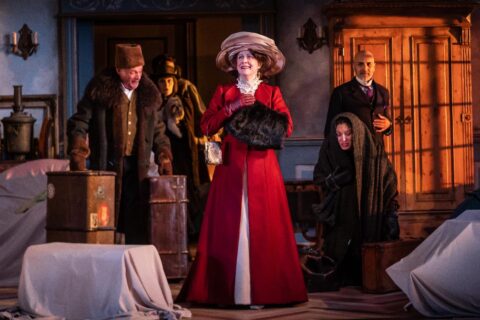
L-R) Matt DeCaro, Janet Ulrich Brooks, Kate Fry, Alejandra Escalante and Kareem Bandealy in Anton Chekhov’s The Cherry Orchard

The plot revolves around widow Madame Lubov Ranevskaya who has just returned to her crumbling estate right before its auction to pay off her debts. She is lamenting the loss of her precious cherry orchard.

Her family surrounds her in support, yet they all have issues of their own.  

Chekhov’s strategic use of foreshadowing is evident in many places,  letting the viewers know that something bad is about to happen.

The ending is somewhat shocking, but enriches the story and its deeper meaning.

Kate Fry as Lubov Ranyevskaya is the perfect matriarch, showcasing a variety of emotions from frivolity and joy to deep melancholy and despair as to what the future holds.  She is exuberant.

Standouts also include Janet Ulrich Brooks as Carlotta, the governess who also has a few magic tricks up her sleeve, and Stephen Cefalu as perpetual student Petya Trofimov who represents the play’s moral compass of social justice.

Note the off-stage music played by the Maxwell Street Klezmer Band led by Alex Koffman, in their first collaboration with The Goodman. Their arrangements lend 19th-century authenticity and warmth to the production. 

Kudos to set designer Todd Rosenthal for his exquisite settings that move about the stage in absolute precision. Ana Kuzmanic’s costumes are gorgeous, colorful when need be with themes of red, black, and ivory. Memories of these costumes will stay with you long after the show.

For more background, attend Behind the Curtain (April 22 at 4:30pm)—led by Goodman’s resident dramaturg Neena Arndt. She will lead a conversation with former Goodman artistic director Robert Falls about his fresh take on the last of Chekhov’s four major plays. 

Details: The Cherry Orchard” is at Goodman Theatre through April 30, 2023 in the Albert Theatre.  Running Time: 2 hours and 15 minutes with one intermission. For tickets and more information, go to GoodmanTheatre.org/Cherry or call (312) 443-3800.

Mira Temkin

For more shows visit Theatre in Chicago


Chicago theatres temporarily suspend productions

Goodman and many other Chicago theatres are temporarily suspending productions due to the C viru. (Photo courtesy of Goodman Theatre)

Lights are out not just on New York’s famed Broadway. Because the Coronavirus is so contagious, most of the stages in Chicago, considered the most prolific theater production community in the U.S, have also temporarily dimmed their lights, according to League of Chicago Theatres Executive Director Deb Clapp. (And yes, some spell theater as theatre).

The decision was made shortly after Governor J.B. Pritzker and Chicago Mayor Lori Lightfoot urged that public gatherings of more than 250 people be suspended until possibly May 1. The mandated temporary suspension was for gatherings of more than 1,000 people.

The safety and health of our audiences, artists and theatre staff remains our highest priority,” said Clapp. “As the situation around COVID-19 evolves, we will continue to share with our member organizations precautions they can take as outlined by federal health authorities and state and local officials to ensure that theatres are ready to welcome patrons back after this temporary shut-down.”

Capp noted that the League is working to support members with venues fewer than 250 as they decide the best course of action for their individual venues. She also suggested that theater patrons who already have tickets should contact those theaters for more information.

In a separate statement, Goodman Theatre announced its suspension of performances beginning March 13. The action affects the Chicago premiere of Jocelyn Bioh’s “School Girls; Or, The African Mean Girls Play” directed by Lili-Anne Brown that was slated to open March 16.

The opening of Brian Friel’s “Molly Sweeney” directed by Robert Falls, has been postponed to April 20.

“Goodman Theatre prioritizes the health and safety of our audiences, artists and staff,” said a joint statement released by Artistic Director Robert Falls and Executive Director Roche Schulfer.

The statement went on to say, “We hope this action will help the nationwide endeavor to contain this devastating virus. We will continue to monitor this situation as it unfolds and communicate plans for the future. We are grateful for all that our artists and staff have invested in this production, and appreciate our audience and patrons’ understanding and support during these unprecedented times.”

Goodman options for ticket holders included a credit towards a future Goodman production or a tax deduction for the total value. Goodman Patron Services will be in touch to make arrangements, or patrons can email BoxOffice@GoodmanTheatre.org or call 312.443.3800. Tickets to future productions continue to be available. Visit GoodmanTheatre.org for the latest updates.

Jodie Jacobs


Dinner and a show from a theater reviewer

Goodman Theatre (Photo courtesy of Goodman Theatre)

Theater critics tend to return to the same places before covering a show. They are not usually the upscale places gone to for a special occasion or the newest eatery with a gourmet menu or “in” vibe.  They have good food and are convenient to the venues.

Here are my recommendations based on experience for two downtown theaters ( I use theater spelled er) and two places in the northern suburbs. More areas later.

Downtown-Loop

When going to the Goodman Theatre  170 N Dearborn St. or James M  Nederlander Theatre, a Broadway in Chicago venue at  24 W. Randolph St., I reserve a table in the bar at Petterinos (312-422-0150, 150 N. Dearborn St.) at the corner of Dearborn and Randolph Streets.

The bartenders here are terrific. They serve their patrons quickly when they know they have a show. And I like the fried calamari when looking for something light and the amazing chicken pot pie when cold weather calls for a dish to warm the insides.

The restaurant is literally next door to Goodman and just a few steps across Dearborn to the Nederlander (former Oriental). I take public transportation but Petterinos has a valet service for customers who want to park there and see a show.

Downtown – Mag Mile

There are lots of places to dine on and near the Magnificent Mile. But when reviewing a show at Lookingglass Theatre, 821 N Michigan Ave. in the historic Water Tower Water Works  on the east side of the Water Tower campus or at the Broadway Playhouse at Water Tower Place, 175 E. Chestnut St., I reserve a table at Mity-Nice Grill on the Mezzanine Level of Water Tower Place (835 N. Michigan Ave., 312.335.4745).

I like their veggie burger and their salads and that they bring tiny Yorkshire pudding bites to start the meal.

North Suburbs – Lincolnshire

I look forward to dining at the Three Embers Restaurant in the Marriott Resort, 10 Marriott Dr., when reviewing a show at the Marriott Theatre in Lincolnshire.

Executive Chef Pierre Daval and Chef de Cuisine Jesus (Chuy) Medina are currently showcasing their Harvest Dinner. At Three Embers, diners get honey butter for their rolls that is a taste treat made with honey from Daval’s beehives on the property. I also love the Honey BBQ Brisket with smoked grits. But I’m thinking of trying the Sea Scallops dish with butternut squash and a maple glace when I go for the next show because squash and maple are too seasonal to pass up.

North Suburbs – Skokie

Across the road from Northlight Theatre at the North Shore Center for the Performing Arts, 9501 Skokie Boulevard, Skokie, is a small strip mall that contains the popular Bonefish Grill at 9310 Skokie Blvd. Yes, you need a reservation and tell the waitperson you are going to a show.

I like the restaurant’s bread and dipping oil, its Caesar Salad and any shrimp dish with a variety of sauces.

Feel free to leave your own recommendations.

Jodie Jacobs


An argument for women playing Shakespearean male leads


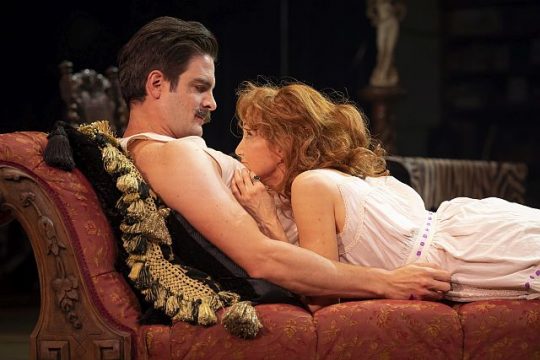
John Tufts (Edmond Rostand) and Terri McMahon (Sarah Bernhardt) in Bernhardt/Hamlet at Goodman theatre. (Liz Loren photo)
John Tufts (Edmond Rostand) and Terri McMahon (Sarah Bernhardt) in Bernhardt/Hamlet at Goodman Theatre. (Liz Loren photo)

3 stars

In “Bernhardt/Hamlet” now playing at Goodman Theatre, prolific playwright, screenwriter and novelist, Theresa Rebeck has pulled back the curtain on a real happening,  populated by real people. She colors it with witty, fictionalized dialogue in the first act.

Rebeck’s heroine, the incomparable French actress, Sarah Bernhardt, born Henriette-Rosine Bernard in 1844, had played Dumas’ “La Dame Aux Camelias,” which is repeatedly mentioned in the play as no longer a suitable role for an aging actress.

And she was in “L’Aiglon,” written by her lover, Edmond Rostand, a main character in “Bernhardt/Hamlet” played by John Tufts.

Just as important, is that Bernhard really did play male parts including Shakespeare’s Hamlet, which she preferred to Ophelia and Gertrude, and she did have to argue about those choices with the critics. But, after all, she was Bernhardt. By the way, her “L’Aiglon” role was as the Duc.

Continue reading “An argument for women playing Shakespearean male leads”

Around Town has three exceptional theater events to put on the calendar


Jay Pritzker Pavilion is a concert venue in Millennium Park designed by Fran Gehry. (J Jacobs photo)

Think “The Music Man.” Then add such shows as “Come From Away,” “Frozen” and “Hamilton.” But as the guy on TV says, “Wait, there’s more.” Add in opera star Maria Callas to make three spectacular evenings – one in July, another in August and the third one in early September.


  “The Music Man”

Goodman Theatre and the Department of Cultural Affairs and Special Events (DCASE) has a double bill of a short performance by “The Music Man” cast members followed by a screening of the movie featuring Robert Preston and Shirley Jones.

When: July 23, 6:30 p.m. remarks, 6:34 p.m. performance and 6:45 p.m. film.

Where: The Jay Pritzker Pavilion and The Great Lawn at Millennium Park at Randolph Street and Michigan Avenue.

Admission: Free

For park information visit Millennium Park For the film series visit Choose Chicago/Millennium Park/Summer films.  For Goodman Theatre’s “The Music Man” visit GoodmanTheatre.


Broadway In Chicago Summer Concert (Coming shows peek)

Co-sponsored by DCASE and ABC 7, several shows from Broadway In Chicago’s 2019-2020 season will be live in concert including “The Phantom of the Opera, The Band’s visit, Summer: the Donna summer Musical, “Once on this Island, “My Fair Lady”, “Mean Girls,” Hamilton” Fronzen, “Dear Evan Hansen and “Come from Away.”

When: Aug. 12 at 6:15 p.m

Where: Jay Pritzker Pavilion in Millennium Park at 201 E. randolphg st.

Admission: Free.

Visit www.millenniumpark.org For more information on the Summer Concert and Broadway In Chicago, visit www.BroadwayInChicago.com.


Diva Maria Callas

Some of Callas’ greatest performances have been digitally re-mastered using state-of-the-art 3D hologram technology by Base Hologram Productions. They will be backed by the Lyric Opera Orchestra conducted by Elmear Noone.

When: Sept 7, 2019 at 7:30 p.m.

Where: Lyric Opera House, 20 N. Wacker Drive.

Co-presented by Lyric Opera of Chicago and Live Nation.

Admission by tickets. Visit  Lyric Opera/Callas


Jodie Jacobs

Interesting ‘Music Man’ production on Goodman stage


Geoff Packard (Harold Hill) and Monica West (Marian Paroo) in 'The Music Man at Goodman (Photo by Liz Lauren)
Geoff Packard (Harold Hill) and Monica West (Marian Paroo) in ‘The Music Man at Goodman (Photo by Liz Lauren)


3 stars

If old enough to have seen and loved the 1962 film “The Music Man” you’ll likely be expecting someone like Robert Preston to be portraying con man Harold Hill and someone like Shirley Jones as the reserved librarian/music teacher Marian Paroo in the production now playing at Goodman Theatre.

And maybe you would expect the townsfolk to be human beings rather than stereotyped small-town farm characters.

Helmed by the amazingly creative Mary Zimmerman, the Goodman show has several fun moments from the superb opening “Rock Island” salesmen (and woman) train scene and the “Pick-a-Little, Talk-a-Little” hen-clucking number to the delightful quartets by formerly bickering board members.

Heidi Kettenring (Eulalie Mackecknie Shinn), Nicole Michelle Haskins (Alma Hix), Bri Sudia (Maud Dunlop), Lillian Castillo (Ethel Toffelmier) and Danielle Davis (Mrs. Squires) (Photo by Liz Lauren)

But the strong emotions of the lead characters and townsfolk found in the film, the Broadway revivals and some other Chicago and regional productions are missing.

Part of the problem may be that even though the dancers are excellent, the many dance numbers run too long in a show that really is about changing people’s attitudes.

That change was accorded a small nod at the end. However, I was disappointed that the band didn’t march onto the stage from the wings in a more stirring finale.

Broadway and national tour regular and Chicago stage veteran Geoff Packard does an OK impression of Harold Hill but something seems to be lacking in his interaction with Paroo played by Chicago and regional theater veteran Monica West. They have the credentials, (a request often asked of Hill by River city’s mayor) but their interaction seems more surface than substance.

Chicago actor Mary Ernster was delightful as usual as mom Mrs. Paroo. And a shout-out goes to the charming quartet of James Konicek, Christopher Kale Jones, Jeremy Peter Johnson and Jonathan Schwart.

The production is worth seeing for the fine book, music and lyrics by Meredith Willson, the excellent musical direction by Jermaine Hill (not related) and hearing the exciting “Seventy Six Trombones.”

DETAILS: “The Music Man” is at Goodman Theatre, 170 N. Dearborn St., Chicago, through Aug. 18, 2019. Running time: 2 hours, 30 minutes with one intermission. For tickets and other information call (312) 443-3811 and visit Goodman Theatre.

Jodie Jacobs

 For more shows visit Theatre in Chicago