Writers Museum opens

Heads up readers, writers and writer wannabes.

Lobby of American Writers Museum in Chicago. Photo by Jodie Jacobs

There is a suite of rooms where you can go to soak up inspiration, visit authors, try an interactive literary game and learn where authors’ homes are across the country. The place also has a charming children’s lit space.

This amazing suite is the American Writers Museum opening to the public May 16. Spread across the second floor of a vintage building at 180 N. Michigan Ave., it is easy to wander at approximately 11,000 square feet.

But oh, what is packed into this tiny museum gem is amazing.

Imagine a wall that is, in a way, a bookshelf where the front of lit boxes can be slid sideways for info about a novelist, non-fiction author, poet or song writer.

Fill in the blanks a a game console at the American Writers Museum. Jodie Jacob s photo

Look for the room with a game console where one or two players can  guess what words should fill in the blanks of a famed piece of literature.

Then go to the Readers Hall, an open space where talks are given but also where visitors can vote for their favorite books and authors.

Another fun space has the Featured Works Table where you tap a symbol on a ribbon and it will move over to you to tell you about its genre, author or work.

Or walk along a 60-foot wall that gives examples of literary works beginning back with Native American lore.

Wall of literary history at American Writers.Jodie Jacobs photo

Create your own literary work in the Story of the Day room. Do it the old-fashioned way with pencil and paper or typewriter, or you can use digital media. Post it on the wall, take it home or add it online to the museum’s “story of the day.”

Want to get into a groove to write? There is “Anatomy of a Masterwork,” a wall that includes such author work habits as have a cigarette, get a drink, etc. But you can touch screens that make sense to you.

Do stop at the Children’s Literature Gallery.  It is likely to remind you of books read or books you read to your children. The artwork is gorgeous. There is a place to read or come back for an author story-time.

Children's books and pictures might encourage young readers to write their own stories. Jodie Jacobs photo
Children’s books and pictures might encourage young readers to write their own stories. Jodie Jacobs photo

Before leaving, look at the map that shows what authors live near you.

The museum is small but absorbing the information in its exhibits and doing the interactive stations could take half a day.

BTW, you might even bump into a writer while there.

On a recent visit to check out the museum, award-winning author Francine Pappadis Friedman who had been wandering through the rooms, took time to chat.

“I’m so impressed by the AWM’s beautiful layout with so many interesting and fun interactive exhibits,” Friedman said.

“The tables were turned: as a writer and former English and journalism teacher, I was the one who learned so much  about many authors—some of whom were “new” to me—just by visiting the museum.

Of the spaces that spoke to her, one particular one stood out.

“One of my favorite sections was The Writer’s Room, a rotating gallery that will highlight the lives and works of American authors.  The current author that is highlighted is Jack Kerouac, with his phenomenal manuscript’s scroll on display, “ she said.

Friedman believes the AWM will be a destination. “I’ve already mentioned it to many of my friends, and we’re getting our calendars out and making plans to visit it.”

Details: American Writers Museum, opening May 16, 2017, is at 180 N. Michigan Ave., Second Floor, Chicago, IL 60601. For admission, hours and other information call (312) 374-8790  and visit American Writers Museum


Cordova exhibit makes viewers think

Appearances are deceiving would be a good warning when walking into “Smoke, Nearby,” the gallery at Museum of Contemporary Art Chicago currently exhibiting works of Mexico City-based sculptor Tania Peréz  Cordova.

"We Focus on a Woman Facing Sideways" 2013-17, Bronze, Swarovski Crystal drop earring and a Women wearing the other earring. Photo by Jodie Jacobs
“We Focus on a Woman Facing Sideways” 2013-17, Bronze, Swarovski Crystal Drop Earring and a Women wearing the other earring. Photo by Jodie Jacobs

Her works are not meant to be looked at in passing. They require more than a glance at something mounted piece before going on to a work displayed on the floor.

As explained on a board near a sculpture with an earring the artist explains: “A woman s missing her left earring. It is suspended on a brass ribbon in the gallery. Until it is reunited with its mate the sculpture exists in both places simultaneously.”

Thus her pieces are experiential. Or as Cordova said when interviewed before the exhibit opened, “They are stories and possibilities.”

Continue reading “Cordova exhibit makes viewers think”

Stoneism rolls through past rock eras with Exhibitionism


If you’re a fan of legendary rockers Mick Jagger and Keith Richards and their Rolling Stones band you needn’t ask why go to Navy Pier to see Exhibitionism.

Rolling Stones instruments and more in Exhibitionism. Photo by Jodie Jacobs

An all encompassing retrospective, the traveling show that opens April 15 and goes through July 30, 2017,  has rooms of costumes, films, posters, art, recordings, instruments and personal paraphernalia, that are likely to bring back memories of concert tours and albums.

But even if other bands have had you screaming and shaking, the exhibit is still worth seeing as a cultural and musical phenomenon that goes back to the 1960s and continues in the 21st century.

A British export that is a combo of blues and rock ‘n’ roll, the band was inducted into the Rock and Roll Hall of Fame in 1989 and the UK Music Hall of Fame in 2004. But they proved they could still draw crowds with their record breaking concerts: Voodoo Lounge Tour in 1994–95 and Bridges to Babylon Tour, 1997–98, to their Licks Tour in 2002–03 and A Bigger Bang Tour, 2005–07.

Band recording studio in Exhibitionism show. Jodie Jacobs photo
Band recording studio in Exhibitionism show.
Jodie Jacobs photo

What to expect at “Exhibitionism.” The show recreates the Chelsea (London) flat in Edith Grove shared in 1962 by Jagger, Richards and Brian (Jones shared in 1962. Also recreated is a Stones’ recording studio and a backstage area. There is a guitar room that includes Richards’ Maton that came apart during “Gimme Shelter.”

But where some visitors may be snapping photos and selfies is the fashion gallery of impressive costumes. They’re devilishly wild and what would be expected of the Stones. Save time to watch the films that include a concert near the exhibit’s end.

Jagger and Richards explained on the Rolling Stones website the why behind “Exhibitionism.”

Rolling Stones costumes in Exhibitionism at Navy Pier. Jodie Jacobs phto
Rolling Stones costumes in Exhibitionism at Navy Pier.
Jodie Jacobs photo

“We’ve been thinking about this for quite a long time but we wanted it to be just right and on a large scale,” said Mick. “It’s not going to be like walking into a museum. It’s going to be an event, an experience. It’s about a sense of The Rolling Stones – it’s something we want people to go away talking about it.”

“While this is about The Rolling Stones, it’s not necessarily only just about us,” said Keith. “It’s also about all the paraphernalia and technology associated with a group like us, and it’s this, as well as the instruments that have passed through our hands over the years, that should make the exhibition unforgettable.”

Details: “Exhibitionism is at Navy Pier, 600 E. Grand Av., Chicago, April 15 to July 30, 2017. For tickets and other information visit Stones Exhibitionism.


Around Town in early April

So what if you have to walk between the raindrops. It’s April!

There are enough events in the Metropolitan Chicago area to brush aside gloomy weather and news outlooks for the entire month. Indeed, there is so much going on that here is just a first look at what’s happening so you can get tickets and fill in a couple of calendar spots.

Steam engines are again going around the Illinois Railway Museum tracks. Photo by Webster's Unabridged Inc and Illinois Railway Museum
Steam engines are again going around the Illinois Railway Museum tracks. Photo by Webster’s Unabridged Inc and Illinois Railway Museum


RR Fun

Visit a mid1800s train depot and hop on board some diesel and steam locomotives and assorted Pullmans, dining cars and cabooses at the Illinois Railway Museum. The museum is about an hour northwest of Chicago in Union City.  Closed for the winter, it just opened April 2 for the 2017 season and will remain open weekends through October. Weekday hours go from May through September.

The Illinois Railway Museum is at 7000 Olson Rd., Union, IL 60180. For cost, hours, directions and other information visit Illinois Railway Museum or call (800) Big Rail (244-7245).


See  robots

Head over to the Museum of Science and Industry for National Robotics Week activities April 8-9 and 14-15, 9:30 a.m. to 2 p.m.. Drone racing is April 8 and 9. .For more information visit MSI and MSI Robotics.

The Museum of science and Industry is at 5700 S. Lake Shore Drive, Chicago (773) 684-1414.


Listen to glorious music

Hear tenor Lawrence Brownlee (think bel canto) and bass-baritone Eric Owens (Lyric’s “Ring”) with pianist Craig Terry at a Lyric Opera recital at the Civic Opera House, 3 p.m. April 9.

The Civic Opera House is at 20 N. Wacker Dr, Chicago. For tickets and other information visit Lyric and call (312) 827-5600.


A museum where pinball machines mix with Chicago artists

Ed Paschke, "Blackout," 1980, Private Collection. Photo by Jodie Jacobs
Ed Paschke, “Blackout,” 1980, Private Collection. Photo by Jodie Jacobs


If you are the director of an art museum and are planning on showcasing art of the 1960s, 70s and early 80s in Chicago, particularly that of the Hairy Who and the Chicago Imagists and you want an era-appropriate, eye-catching exhibit to put with it, what would you choose?


Continue reading “A museum where pinball machines mix with Chicago artists”

Exhibit prepares for total solar eclipse

Tornado chasing may sound familiar but how about eclipse chasing?

Adler astronomer Larry Ciupik steps on the floor map of eclipses to show how much of the sun will peek out in Las Vegas Nevada which is not right on the path of the 2017 solar eclipse. The green line going across from left to right is the 2017 eclipse path. The map also shows Carbondale, IL as the best place to be. Photo by Jodie Jacobs
Adler astronomer Larry Ciupik steps on the floor map of eclipses to show how much of the sun will peek out in Las Vegas, Nevada which is not right on the path of the 2017 solar eclipse. The green line going across from left to right is the 2017 eclipse path. The map also shows Carbondale, IL as the best place to be. Photo by Jodie Jacobs

‘Chasing Eclipses,’ a new exhibit  at the Adler Planetarium, has a terrific “Eclipses Over America” floor map that includes the primary watching path for the total solar eclipse US residents will experience on Aug. 21, 2017.

Visitors can see that the eclipse will be moving diagonally across the country from Salem, Oregon through Carbondale, IL to Charleston South Carolina. The map also shows the paths of other eclipses. Continue reading “Exhibit prepares for total solar eclipse”

High school students perform on “Hamilton” stage and see the show

The atmosphere inside the PrivateBank Theatre was electric March 15 as hundreds of Chicago high school students filed in to watch their peers perform on the “Hamilton” stage.

Alexander Hamilton and cast. Joan Marcus photo

It was the third of what would be 10 student performances during 2017.

By the end of a  special education program tying “Hamilton’” to their American History studies, 20,000 Chicago high school students will have seen their peers perform in the morning followed by a regular Hamilton matinee.

Continue reading “High school students perform on “Hamilton” stage and see the show”

What would Clarence Darrow think?

Maybe Clarence Darrow’s ghost will appear. But even if you don’t see him, you will hear how his view of populism differs from what is being expressed by today’s politicians when the Annual Clarence Darrow Symposium takes place March 13, 2017.

The Clarence Darrow Bridge is behind the Museum of Science and Industry. City of Chicago MSI photo.

Titled “Robber Barons & Populists: Would Clarence Darrow recognize today’s Populism,” the event begins with a commemorative ceremony at 10 a.m. near the Clarence Darrow Bridge behind the Museum of Science and Industry (where you might see the ghost). Darrow died March 13, 1938.

Ceremony  guests include  Ald. Leslie Hairston, activist Bernardine Dohrn, ACLU of Illinois Associate Legislative Director Khadine Bennett and Gene Winkler, adjunct faculty at the Divinity School, University of Chicago.

John A. Farrell, author of “Clarence Darrow: Attorney For The Damned,” will speak in the Museum of of Science and Industry’s Rosenwald Room beginning at 10:45. Refreshments will be served.

For more information visit Darrow Bridge.

It is Show and Tell Time at the Field Museum

“Specimens: Unlocking the Secrets of Life,” takes Field Museum visitors behind the scenes in a new exhibit.

See what Field Museum scientists found at Mason Creek near Chicago. Photo by Jodie Jacobs

What any scientist knows that few Field visitors grasp as they try to see everything in the museum, is that what’s out there is less than one percent of millions of collection items.

But few Field guests get to see some of those items where they are stored or where the curators work.

Therefore, some of those objects, such as a giant clamshell, a very long sawfish snout (rostrum), a few dinosaur bones and some extinct species have been temporarily moved into a main floor exhibit hall accompanied by videos and interactive tables so visitors get to see some of what the Field collects and why.

“Lots of people don’t realize that we have collections behind the scenes, let alone collections numbering over 30 million objects,” says Director of Exhibitions Jaap Hoogstraten.

The exhibit’s videos and a reconstructed curator’s office with maps showing locations of water beetles, remind visitors that the Field is way more than a place to see interesting items.

“…the Museum is an active research institution where scientists work and make discoveries based upon these collections,” Hoogstraten said.

Some of the specimens reveal chemical and other changes in their environment such as the mercury levels in oceans over time.

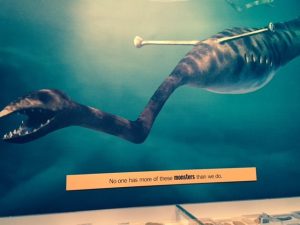
Another display shows creatures and plants that lived millions of years ago. It includes fossils from Mason Creek such as the Tully Monster. The area is an exceptional site south of Chicago that was an inland sea about 300 million years ago.

“Museum collections are a way to preserve the past so that we can learn from it in the future,” Hoogstraten said.

Details: “Specimens: Unlocking the Secrets of Life”  is at The Field Museum, 1400 S. Lake Shore Drive, March 10, 2017 through Jan. 8, 2018. For admission and other information visit Field or call (312) 922-9410.


New art exhibit turns viewers into participants

'Helio Oiticia' exhibit at the Art Institute of Chicago encourages viewers to be participants. Yes, there is a person walking through the blue room. Photos by Jodie Jacobs
‘Helio Oiticia’ exhibit at the Art Institute of Chicago encourages viewers to be participants. Yes, there is a person walking through the blue room. Photos by Jodie Jacobs

Try to define “art.” Think beyond typical words that come to mind.

Think creative use of shapes, color, scenery, structures or materials. Then head over to the Art Institute of Chicago to see ‘Helio Oiticia: To Organize Delirium.’

At ‘Helio Oiticia,’ you not only see the famed Brazilian artist’s definition of art, you experience it. Be prepared to take off your shoes.

When you first walk into the Regenstein Hall you see Oiticia’s fondness for shapes and color. Then you find his actions and reactions to his country’s political upheavals and social issues.

'Helio Oiticia' exhibit at the Art Institute of Chicago
‘Helio Oiticia’ exhibit at the Art Institute of Chicago

But after exploring his large, room-like installations, his sandy beach complete with live, colorful birds and his dark room with a bouncy floor, you see that during Oiticia’s short life (1937-80) he liked to physically share his view of the world.

You will not be a mere viewer of the Art Institute’s show because Oiticia wants you to be a participant.

Look beyond what appears to be paradise.

His “Spatial Reliefs” are hanging structures. “Nuclei” are suspended panels. His famed “Tropicália,” a large installation of sand, birds and foliage done in 1967 contrasts tropical images with what was really going on under Brazil’s dictatorship.


'Tropicali'a is recreated at the Art Institute of Chicago.
‘Tropicali’a is recreated at the Art Institute of Chicago.

Organized by the Art Institute of Chicago; Carnegie Museum of Art, Pittsburgh; and the Whitney Museum of American Art, New York, ‘Helio Oiticia: To Organize Delirium’ is a fascinating retrospective worth seeing and discussing.

Details: ‘Helio Oiticia: To Organize Delirium,’ is at the Art Institute of Chicago, 111 S. Michigan Ave., Chicago, now through May 7, 2017. For other information call (312) 443-3600 and visit AIC.